Launch offer — valid today only

A&P General, Airframe and Powerplant Tests: Every Topic on One Illustrated Page Each System Drawn, Step by Step

Ohm's law, weight and balance, rivets, hydraulic fluids, fuel systems, the four-stroke cycle, magnetos and Form 337: in the Handbook it's a wall of text. Here each topic fits on one page, with the drawing and what you need to remember. 65 illustrated pages.

GET THE ILLUSTRATED PAGES

🔒 Secure checkout · PDF by email · 30-day guarantee

One topic per pageone topic per page, drawn, with the key data in boxes
65 illustrated pages7 parts, from Ohm's law to the last-week review plan
Up-to-date sourcesFAA AMT ACS, AMT Handbooks and AC 43.13-1B

This Is What the Pages You Will Study Look Like

One topic per page, the drawing that shows you how it works and the boxes with what you need to know:

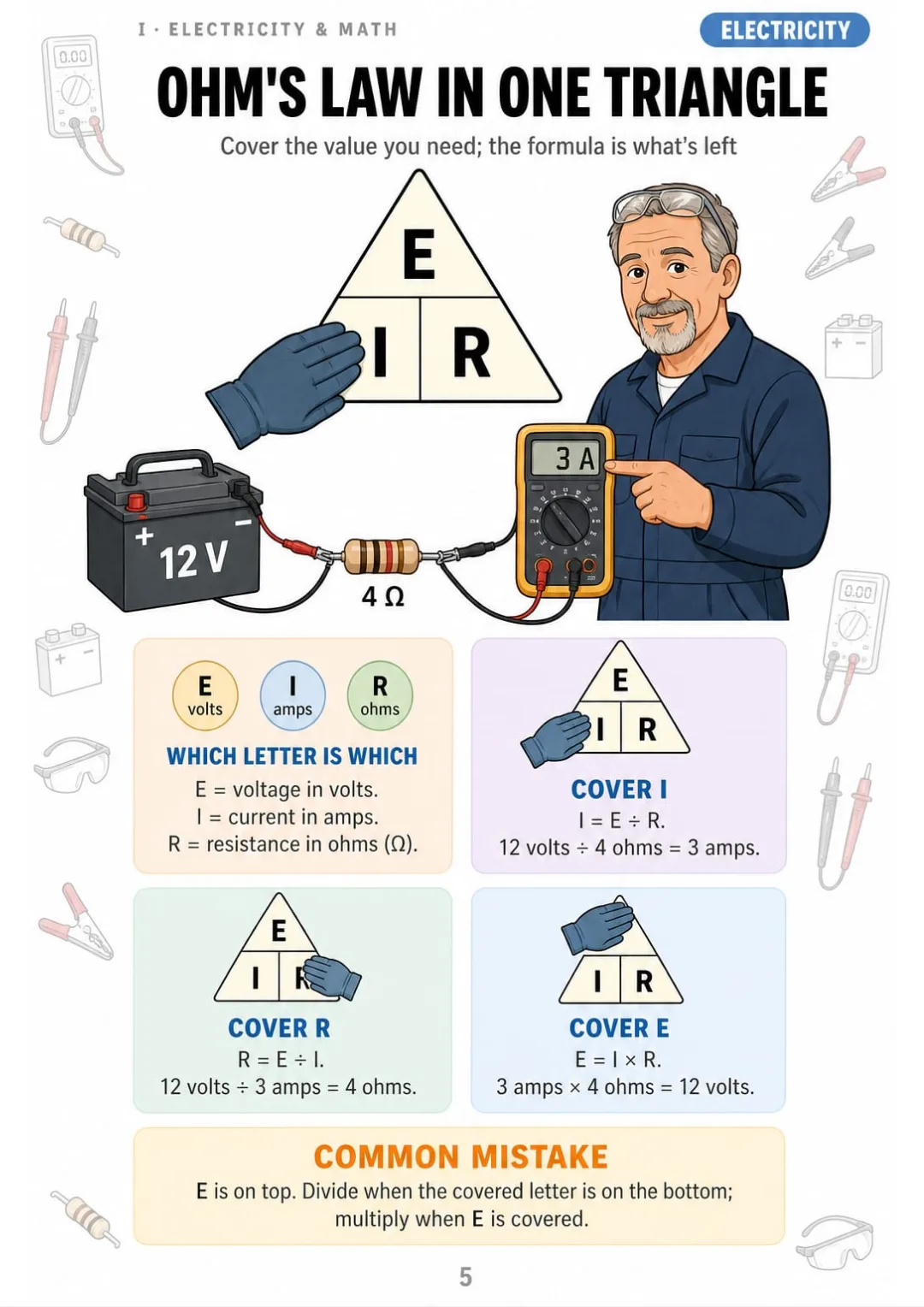
E = I × R: 12 volts across 4 ohms = 3 amps
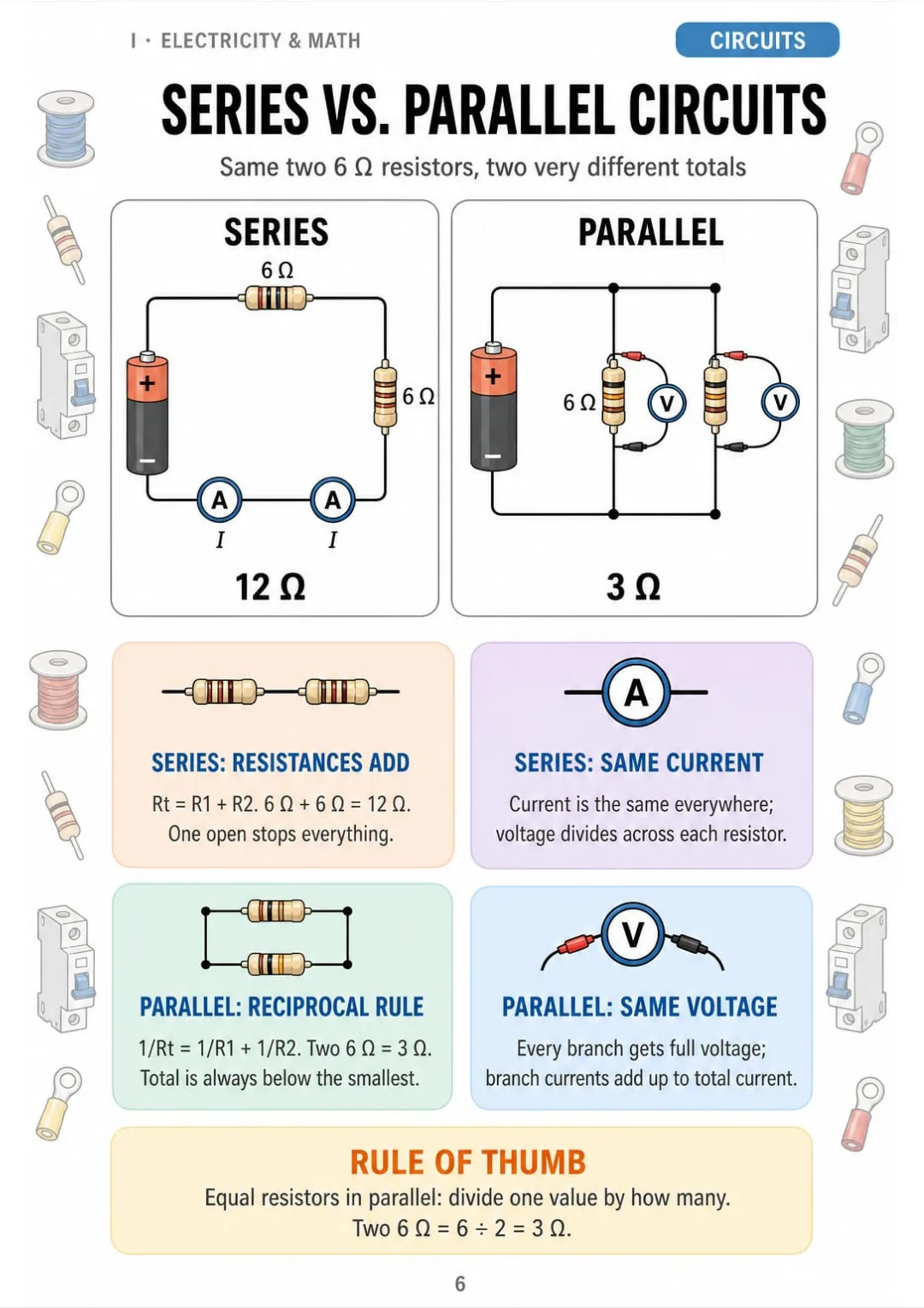
Two 6 Ω: series = 12 Ω, parallel = 3 Ω
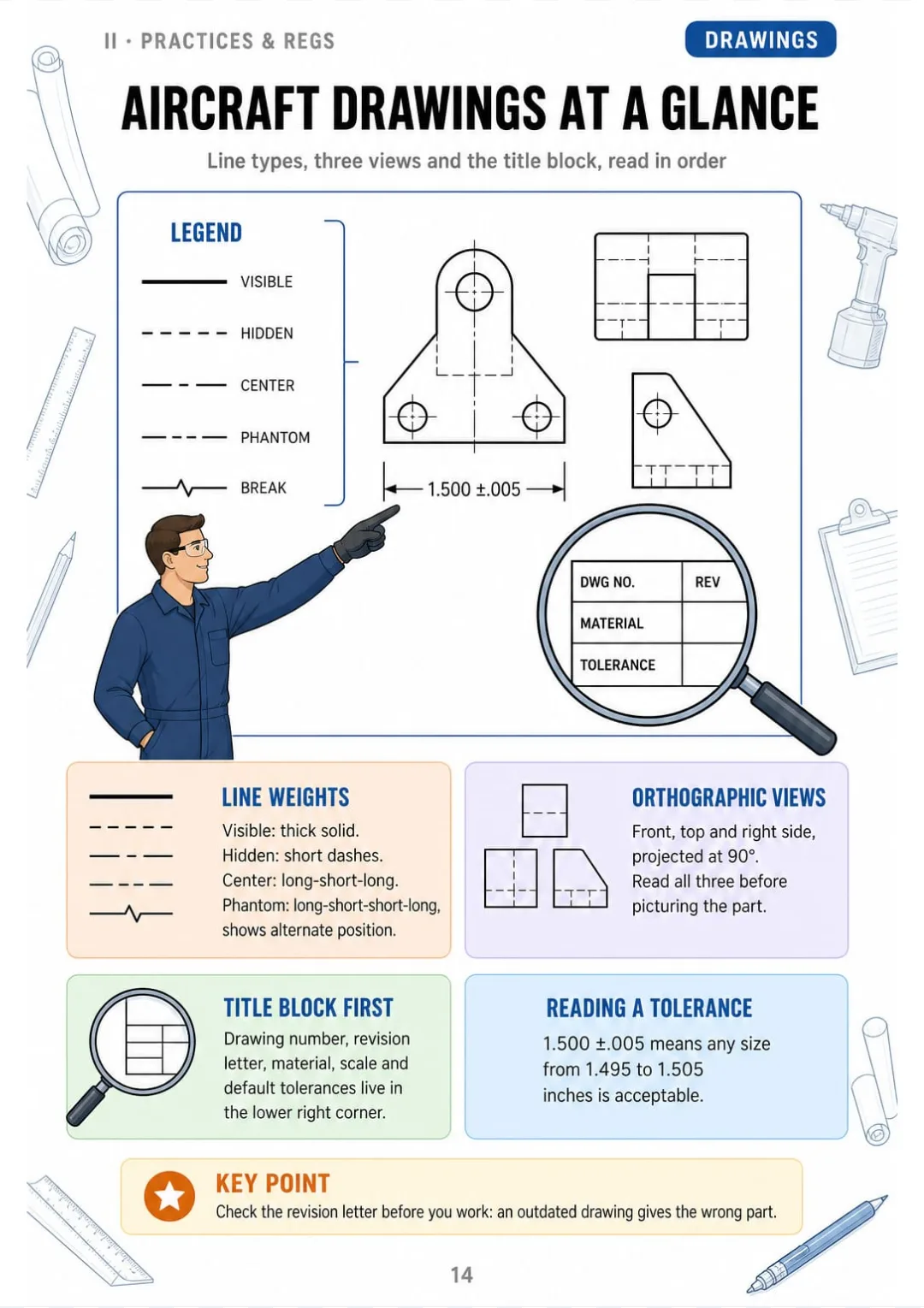
Five line types, three views and a title block: 1.500 ±.005 means 1.495 to 1.505
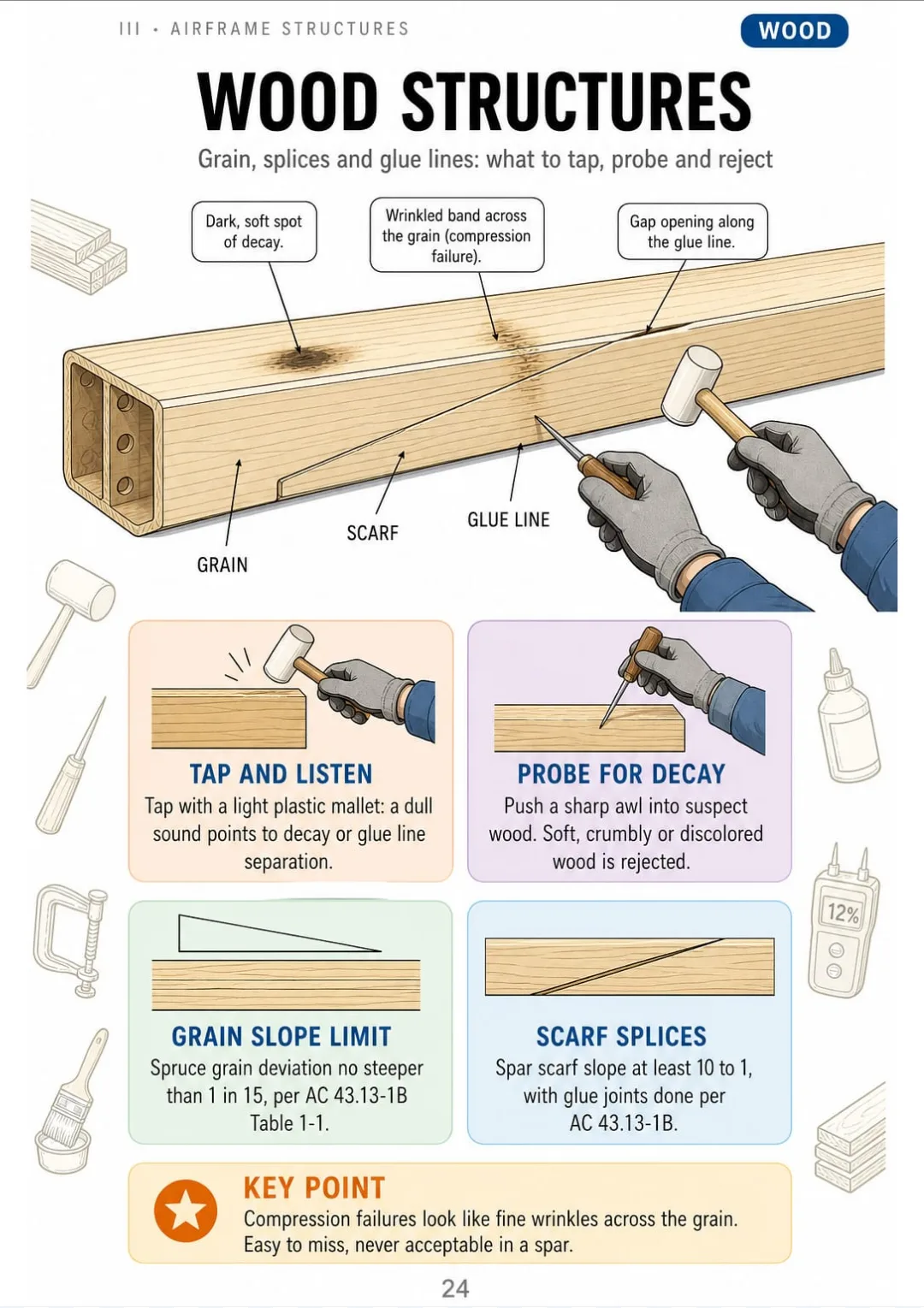
Wood spar drawn with decay, compression failure and glue line separation, plus AC 43.13-1B limits
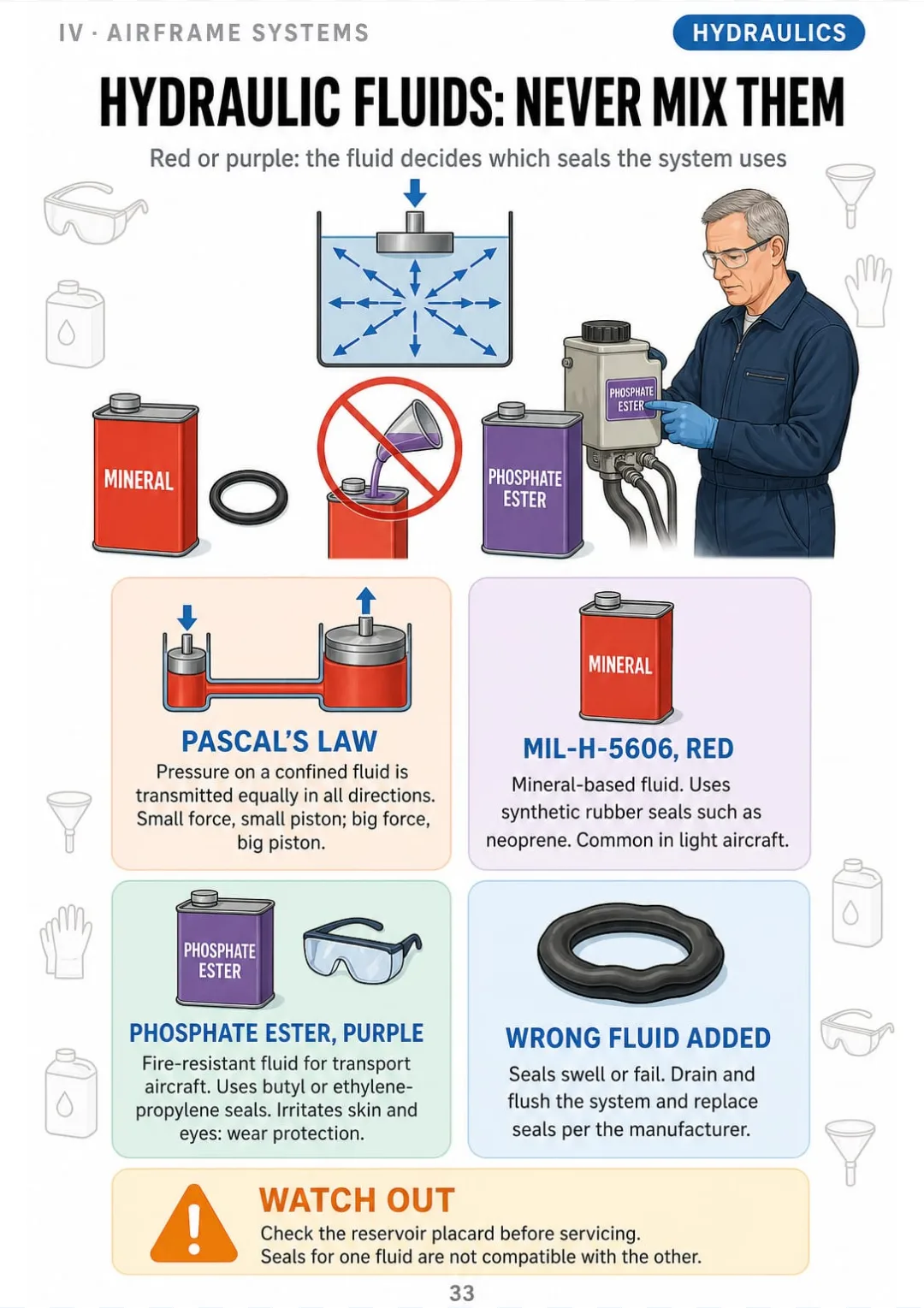
MIL-H-5606 red vs. phosphate ester purple: different seals, never mixed.
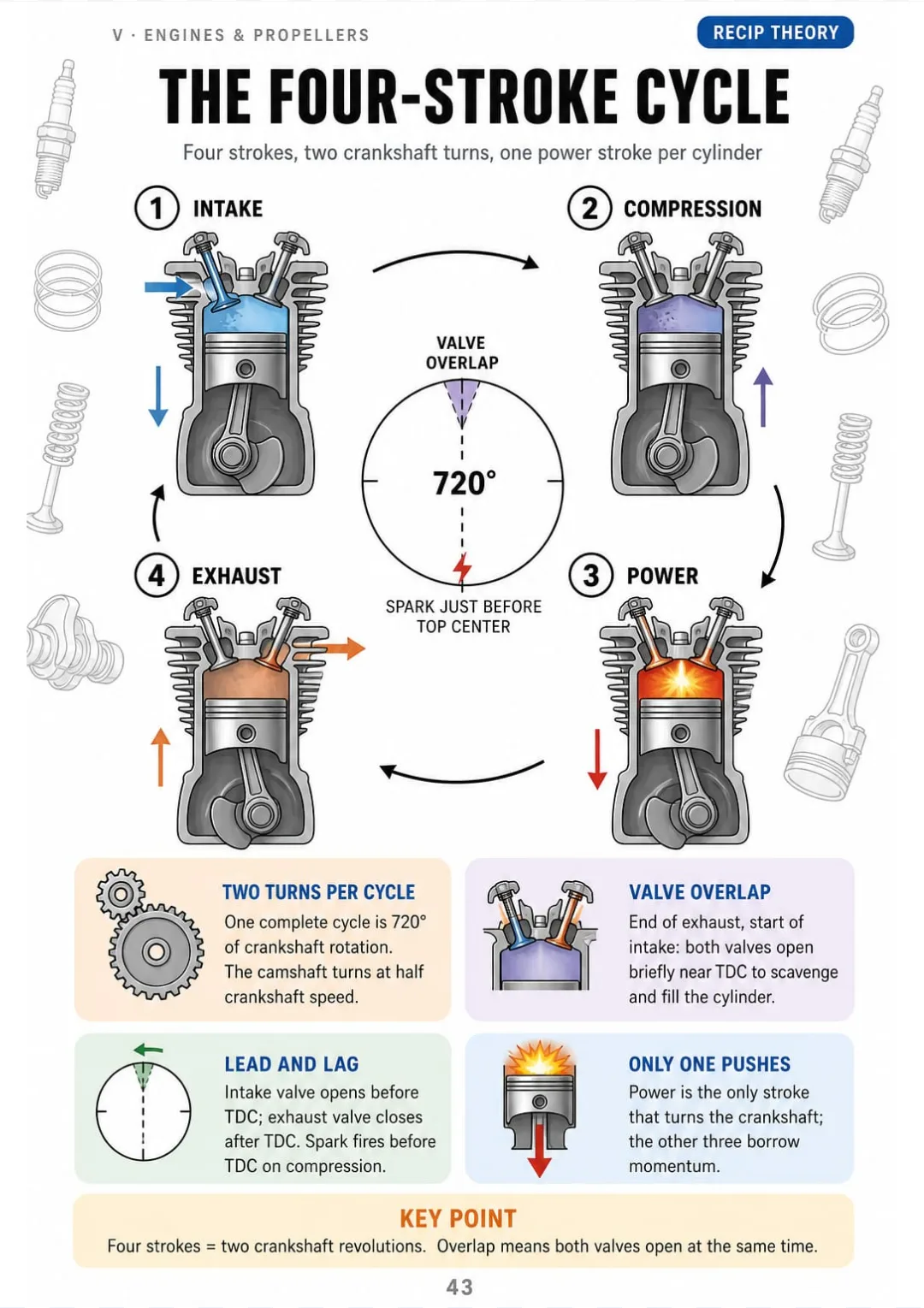
Intake, compression, power, exhaust: 720° of crankshaft rotation, with valve overlap at TDC.
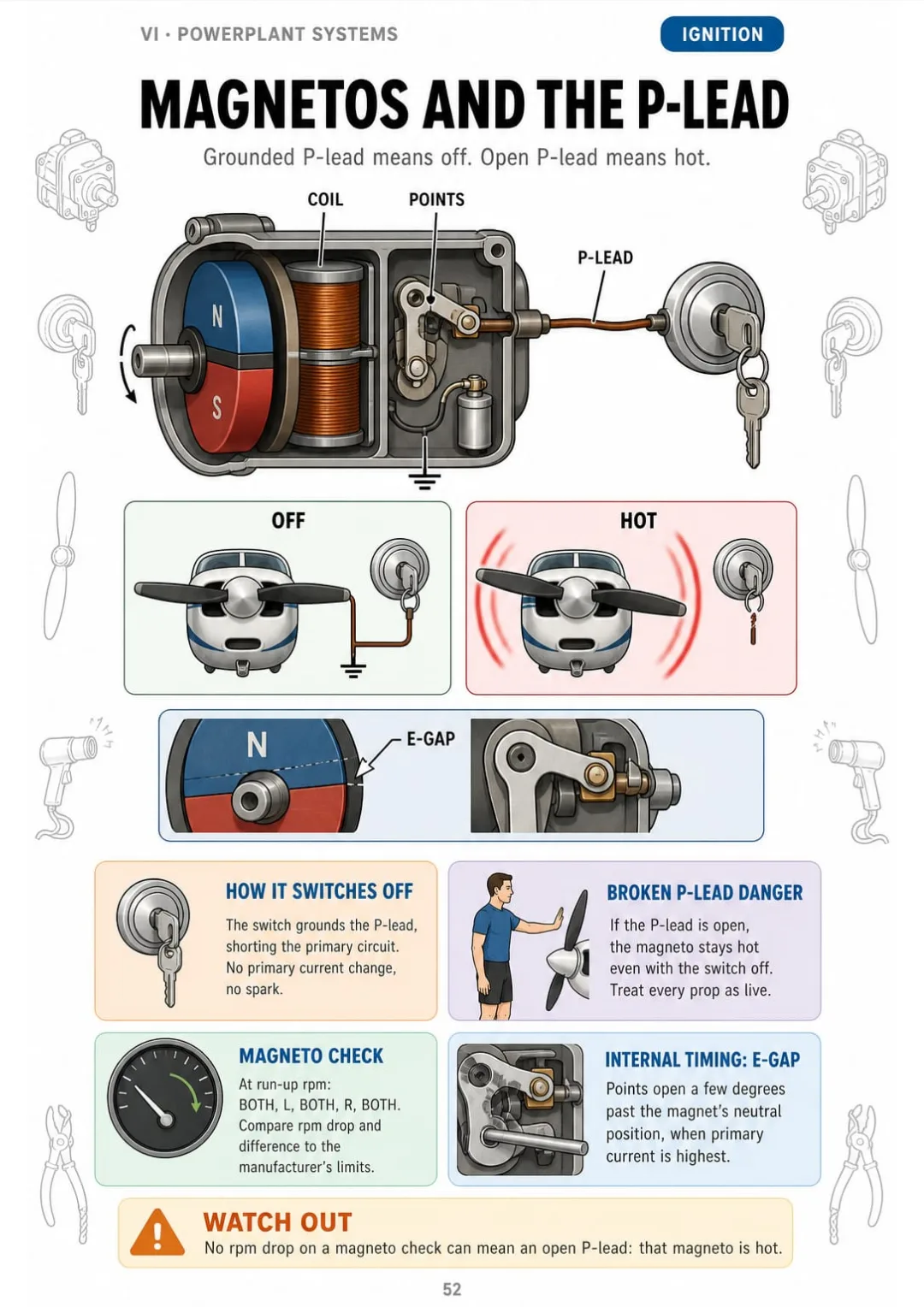
P-lead grounded = magneto off · P-lead open = magneto hot
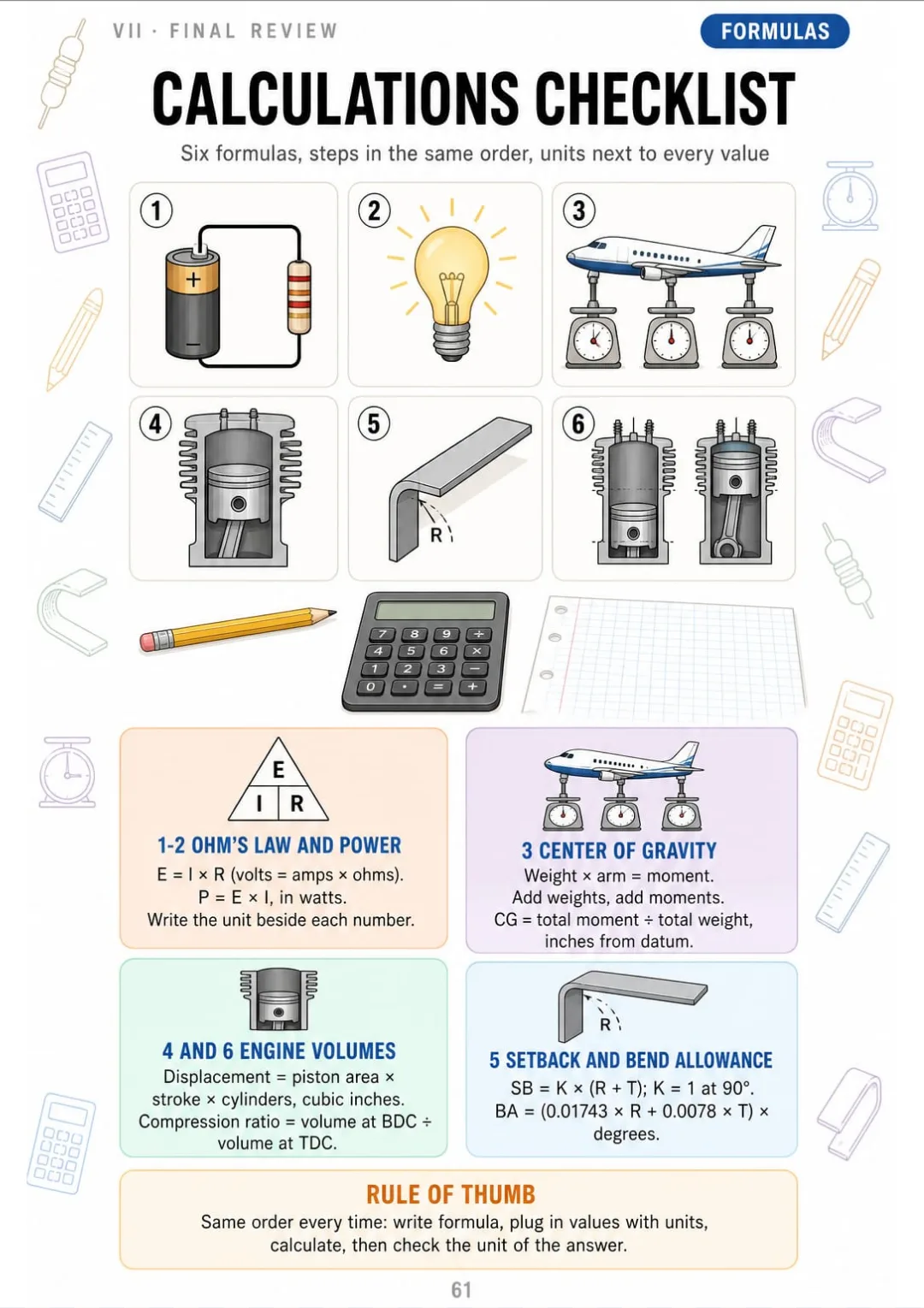
Ohm's law, power, CG, displacement, setback, bend allowance and compression ratio on one page.

Swipe to see more →

These are real pages from the book. The table of contents is the full one: 7 parts and 61 topics.

It's Not Your Memory. Nobody Ever Put It in Order.

You've read the chapter on aircraft drawings three times. You close the Handbook...

...and you can't tell a hidden line from a center line, or what 1.500 ±.005 actually allows. It was just lines of text.

Five line types, three views and a title block: 1.500 ±.005 means 1.495 to 1.505

Here aircraft drawings are one page: the five line types drawn side by side, the three views around the part and the title block, with 1.500 ±.005 worked out as 1.495 to 1.505.

And on the pages next to it, every topic has its own: AN and MS part numbers, corrosion, rivet layout, Form 337 and the magneto P-lead.

First you understand why it works that way. Then everything falls into place.

SEE THE DIFFERENCE

Stop memorizing systems you can't picture:

THIS
  • Pages and pages of dense text
  • Systems without a single drawing
  • On test day, you don't know where to start
In a series circuit, the same current flows through each resistor, and the total resistance is equal to the sum of the individual resistances, such that RT = R1 + R2 + R3. The applied voltage divides across each resistor in proportion to its resistance. In a parallel circuit, the voltage across each branch is equal to the source voltage, while the total current is the sum of the branch currents, and the total resistance is determined by the reciprocal of the sum of the reciprocals of the branch resistances.
FOR THIS
  • Every system drawn
  • One topic per page, with the rules in boxes
  • You remember it because you've seen it
Two 6 Ω: series = 12 Ω, parallel = 3 Ω
CONTENTS

Take a Look at the 7 Parts and 61 Topics

Electricity and math, practices and regulations, airframe structures, airframe systems, engines and propellers, powerplant systems and the final review: 65 pages, all illustrated

IGeneral: Electricity, Physics and Math · pp. 5-13
  1. Ohm's Law in One Triangle
  2. Series vs. Parallel Circuits
  3. Power, Wire Size and Voltage Drop
  4. AC Basics: Sine Wave, RMS and Transformers
  5. Lead-Acid vs. Nickel-Cadmium Batteries
  6. Physics for Mechanics: Standard Day and Density
  7. Weight and Balance: Datum, Arm, Moment, CG
  8. Shop Math: Area, Volume and Displacement
  9. Part I Review
IIGeneral: Practices, Materials and Regulations · pp. 14-23
  1. Aircraft Drawings at a Glance
  2. Fluid Lines and Fittings
  3. Hardware: Reading AN and MS Part Numbers
  4. Nondestructive Inspection: Which Method for What
  5. Corrosion: Galvanic Series and Types
  6. Ground Operations and Servicing
  7. Precision Measuring Tools
  8. Part 65: What a Mechanic Can and Can't Sign
  9. Records: 43.9 Entries and Form 337
  10. Part II Review and the Dirty Dozen
IIIAirframe Structures · pp. 24-32
  1. Wood Structures
  2. Fabric Covering and Finishes
  3. Rivet Identification by the Head
  4. Rivet Layout and the Shop Head
  5. Bend Allowance and Setback
  6. Composite Structures
  7. Welding: Flames and Good Beads
  8. Rigging and Control Cables
  9. Part III Review
IVAirframe Systems · pp. 33-42
  1. Hydraulic Fluids: Never Mix Them
  2. Hydraulic Components
  3. Landing Gear, Struts and Brakes
  4. Aircraft Electrical Systems
  5. Fuel Systems and Fuel Grades
  6. Cabin Atmosphere: Pressurization and Oxygen
  7. Ice and Rain Protection
  8. Fire Detection and Extinguishing
  9. Pitot-Static, Instruments and ELT
  10. Part IV Review
VPowerplant: Engines and Propellers · pp. 43-51
  1. The Four-Stroke Cycle
  2. Inside an Opposed Reciprocating Engine
  3. Differential Compression Test
  4. Turbine Engine Sections
  5. Turbine Inspection: Hot Section and FOD
  6. Engine Inspection, Overhaul and Removal
  7. Propellers: Blade Angle and Governors
  8. Engine Instruments and Markings
  9. Part V Review
VIPowerplant Systems · pp. 52-60
  1. Magnetos and the P-Lead
  2. Spark Plugs: Reading and Rotating
  3. Fuel Metering: Carburetor and Injection
  4. Induction, Turbocharging and Cooling
  5. Lubrication Systems
  6. Exhaust Systems and Thrust Reversers
  7. Starting Systems and APUs
  8. Engine Fire Protection and Electrical
  9. Part VI Review
VIIFinal Review: Before PSI and the DME · pp. 61-65
  1. Calculations Checklist
  2. Common Mix-Ups Side by Side
  3. Knowing the Three Knowledge Tests
  4. Oral and Practical: How the DME Asks
  5. Last-Week Review Plan

What If Every Topic Fit on a Single Page?

Imagine this:

Instead of rereading half a page on magnetos without being able to picture them...

...you open the page and find the magneto drawn with its P-lead: grounded, the magneto is off; open, it's hot.

MIL-H-5606 red vs. phosphate ester purple: different seals, never mixed.

And Ohm's law, weight and balance, rivets, hydraulic fluids and the four-stroke cycle turn into drawings and tables you read at a glance.

You stop memorizing and start understanding.

That's what A&P Mechanic Illustrated does: 7 parts and 65 illustrated pages, with a Review page closing each part and a final review before PSI and the DME. You see each system drawn and in order, so it's easier to bring back on test day.

Because what your brain sees organized, it remembers.

Here Is What You Get with A&P Mechanic Illustrated:

Ipp. 5-13

General: Electricity, Physics and Math

Work out any circuit, wire size or CG problem from one drawing: Ohm's law, series and parallel, voltage drop, AC basics, batteries, standard day and density, weight and balance and shop math.

IIpp. 14-23

General: Practices, Materials and Regulations

Read a drawing, pick the right AN or MS part and make the logbook entry: aircraft drawings, fluid lines, hardware, NDI methods, corrosion, ground operations, measuring tools, Part 65, 43.9 entries, Form 337 and the Dirty Dozen.

IIIpp. 24-32

Airframe Structures

See how a structure is built and repaired: wood, fabric, rivet identification and layout, bend allowance and setback, composites, welding, and rigging and control cables.

IVpp. 33-42

Airframe Systems

Follow each system from source to component: hydraulic fluids and components, landing gear and brakes, electrical, fuel, pressurization and oxygen, ice and rain, fire protection, pitot-static and the ELT.

Vpp. 43-51

Powerplant: Engines and Propellers

Picture what happens inside the engine: the four-stroke cycle, opposed engines, the differential compression test, turbine sections and inspection, overhaul and removal, propellers and engine instruments.

VIpp. 52-60

Powerplant Systems

Trace ignition, fuel and air all the way to the cylinder: magnetos and the P-lead, spark plugs, carburetors and fuel injection, induction and turbocharging, lubrication, exhaust and thrust reversers, starters and APUs.

VIIpp. 61-65

Final Review: Before PSI and the DME

Know what to review and in what order: the calculations checklist, common mix-ups side by side, the three knowledge tests, how the DME asks in the oral and practical, and a last-week review plan.

At the end of the book: A Review page closing each part and a final review before PSI and the DME.

And That Is Not All: 2 More Books, Free

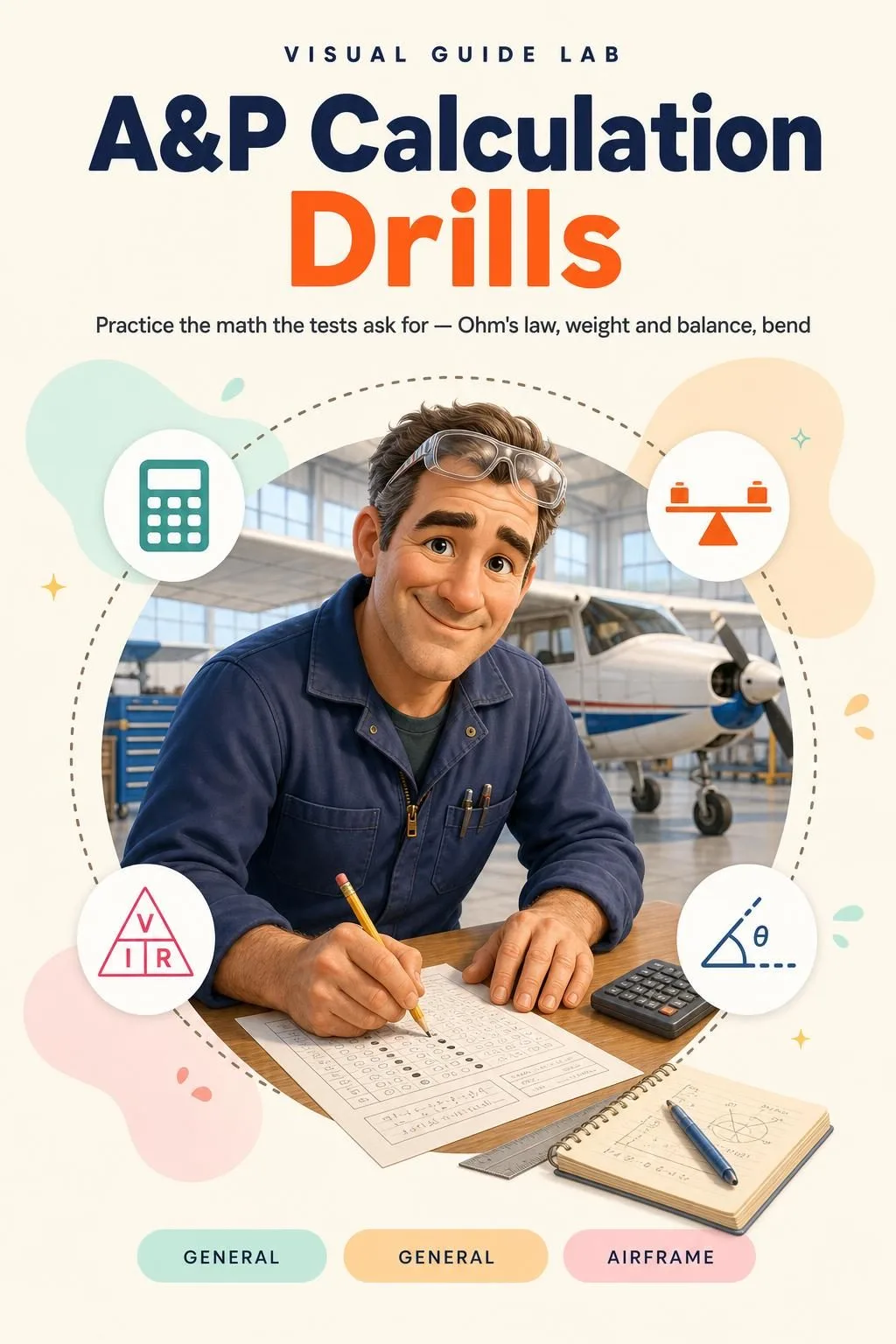
A&P Calculation Drills

BONUS 1: «A&P Calculation Drills»

Value on its own: US$ 17.90

Practice the math the tests ask for — Ohm's law, weight and balance, bend allowance, compression ratio — step by step, always in the same order, with every solution worked out.

Illustrated A&P Glossary & Common Mix-Ups

BONUS 2: «Illustrated A&P Glossary & Common Mix-Ups»

Value on its own: US$ 14.90

Every term with a small drawing, plus the pairs people mix up most often (Part 43 vs. Part 65, anodic vs. cathodic, P-lead open vs. grounded) side by side for a quick review before the test.

A&P Mechanic Illustrated + 2 Free Books

  • A&P Mechanic Illustrated: 65 illustrated pagesUS$ 63
  • BONUS 1: A&P Calculation DrillsUS$ 17.90
  • BONUS 2: Illustrated A&P Glossary & Common Mix-UpsUS$ 14.90
  • High-resolution PDF to printIncluded
Total value US$ 95.80
YOUR PRICE:
US$ 27
You save US$ 68.80
YES, I WANT A&P MECHANIC ILLUSTRATED FOR US$ 27

📄 This is a digital PDF book sent to your email: nothing is printed or shipped.

Secure purchaseEncrypted payment30-day guarantee

PDF by email: A&P Mechanic Illustrated reaches your inbox as a PDF, and the two free books come by email too. One-time payment, no installments or hidden costs.

Is This Book for You?

You're in a Part 147 school

You're in a Part 147 school

Electricity, structures and engines, one topic per page, to review after your shift and before class.

Your knowledge tests are coming up

Your knowledge tests are coming up

General, Airframe and Powerplant in the AMT ACS order, with a Review page closing each part and a final review before PSI and the DME.
You already work on aircraft or engines

You already work on aircraft or engines

For veterans going the experience route and mechanics coming from diesel or auto: the FAA side of what you already know — Part 43, Form 337, magnetos — drawn.

To Sum Up: Here Is What You Get

US$ 95.80US$ 27
YES, I WANT A&P MECHANIC ILLUSTRATED FOR US$ 27

📄 This is a digital PDF book sent to your email: nothing is printed or shipped.

30DAYS
GUARANTEE

30-Day Guarantee

30-day guarantee: tell us what didn't work and we'll refund 100%.

You have 30 days to try A&P Mechanic Illustrated and the two bonus books. If it doesn't work for you, email us, tell us what didn't work and we'll refund 100% of what you paid. One-time payment, no subscriptions, no surprises.

Frequently Asked Questions

How do I receive the material?

You get A&P Mechanic Illustrated as a high-resolution PDF by email, at the address you enter at checkout, to read on your phone or print. The two bonus books, A&P Calculation Drills and Illustrated A&P Glossary & Common Mix-Ups, come by email too.

Is it a monthly or a one-time payment?

One-time payment of $27. No installments, no subscription.

Who is it for?

For Part 147 students, for military veterans and mechanics with an authorized 8610-2, and for anyone preparing for the General, Airframe and Powerplant knowledge tests. It's not a beginner's course: it assumes you work or study in the trade and puts the FAA side of it (regulations, calculations, systems) on one drawn page per topic. Check the table of contents above to see every topic.

What sources is it based on?

On the FAA Aviation Mechanic Airman Certification Standards (FAA-S-ACS-1), the AMT Handbooks (FAA-H-8083-30B General, -31B Airframe, -32B Powerplant), 14 CFR Parts 43, 65 and 91, and AC 43.13-1B. It follows the order of the current AMT ACS, not the old PTS.

I already have the free FAA Handbooks and a test-prep app. What does this add?

The Handbooks are thousands of pages of text, and test-prep apps give you questions without the picture behind them. This book puts each topic on one drawn page, organized by the AMT ACS, so you see how it works before you drill questions. It's an independent study aid: not official FAA material, and not affiliated with the FAA or PSI.

Does it replace my school, my experience or the oral and practical?

No. It's a study aid, not a course: it doesn't issue a certificate, a completion record or a sign-off. It doesn't replace a Part 147 program, your documented experience or 8610-2, the manufacturer's data or the FAA-approved data you work from. It helps you review and organize what you study.

Are there practice questions? Are they the ones on the test?

The book is illustrated pages, not a question bank. The practice questions come in the optional add-on 300 A&P Practice Questions Explained, written to help you train. They are not official FAA test questions.

Can I print it?

Yes. It's a high-resolution PDF: print the whole book or just the pages you want to take to the hangar.

What if I don't like it?

You have a 30-day guarantee: tell us what didn't work and we'll refund 100%.

One Last Thing Before You Decide...

You don't have to reread the same page hoping this time it sticks.

You don't have to memorize systems you can't picture.

And you definitely don't have to walk into PSI not knowing where to start.

Same FAA topics, one drawn page each: 65 illustrated pages plus 2 bonus books, PDF by email.

One-time payment: US$ 27 · Guarantee: 30 days · PDF by email

YES, I WANT A&P MECHANIC ILLUSTRATED FOR US$ 27

📄 This is a digital PDF book sent to your email: nothing is printed or shipped.